
The Best Motorcycle TPMS Systems for Touring Riders
Why Every Long-Distance Rider Should Consider a TPMS
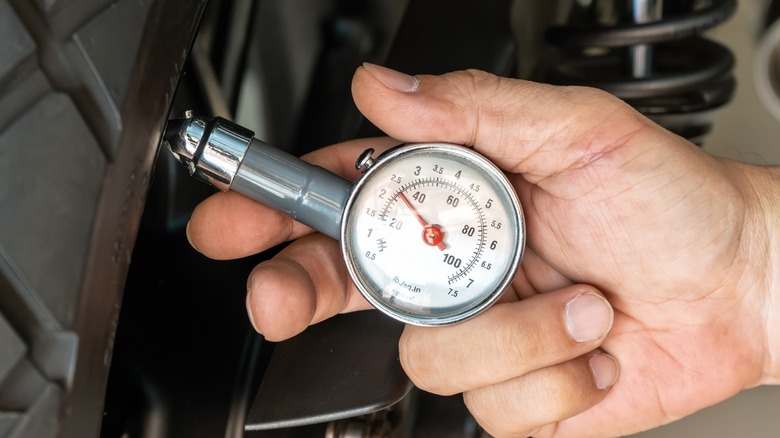
Ask any experienced touring rider what matters most on a long trip, and you’ll hear a familiar list: weather, fuel, navigation, comfort, and tires. While we routinely check tread wear and tire condition before heading out, tire pressure is one of those things that’s easy to overlook once the ride begins. Let’s face it…a big, heavy touring bike is a lot harder to check tire pressure than a street bike or cruiser! Having the best motorcycle tire pressure monitoring (TPMS) system for touring riders will definitely help you from crawling on the ground to check your tire pressure!
Motorcycle Safety tip of The Day: Compact Tire inflators are now common place. They’re small, lightweight, battery operated with charges that last for weeks when fully charged. Get one, because you never know how long and far it will be to access a source of air!
Tire Pressure Monitoring Systems are standard equipment on some newer touring bikes. But there are tens of thousands of great touring bikes still on the road that don’t, and improper tire pressure can lead to a list of things that you don’t want to happen when riding. So, what are the best motorcycle TPMS systems for touring riders, and touring bikes?
The reality is that tire pressure can change dramatically during a long day on the road. Temperature fluctuations, slow leaks, punctures, and normal air loss can all affect how your motorcycle handles. That’s where a motorcycle tire pressure monitoring system (TPMS) can make a real difference.
A quality motorcycle TPMS continuously monitors tire pressure and temperature while you ride, providing real-time information and alerts when something isn’t right. For touring riders covering hundreds of miles in a day, that extra awareness can improve safety, extend tire life, and provide peace of mind when you’re far from home.
With more options available than ever before, choosing the best motorcycle TPMS for touring riders can be challenging. We looked at five popular systems currently available and evaluated them based on features, ease of use, installation, and overall value.
It is important to note that both external and internal TPMS are battery operated, and do require attention from time to time to make sure the batteries have plenty of life, especially when a long trip is planned.
As you research these different systems, be sure that whatever system you opt for is waterproof and rated around rated IP67. If it’s electronic, water can ruin it!
Now, on to our top 5: The Best Motorcycle TPMS Systems for Touring Riders!
FOBO Bike 2:
*Best for Riders Who Prefer Smartphone Integration
The FOBO Bike 2 has earned a strong reputation among touring riders thanks to its smartphone-based approach. Instead of requiring a dedicated display mounted to your handlebars, the system uses Bluetooth technology to connect directly to your phone.
If you are already using “smart phone” based apps for navigation, weather, and other touring apps, this makes for a very clean solution. No wiring required, no special monitors to mount. Just very clean and simple.
The app provides real-time tire pressure and temperature readings, customizable alerts, and detailed monitoring capabilities.
Pros
- No separate display required
- Excellent smartphone integration
- Real-time pressure and temperature monitoring
- Easy installation
- Competitive price point
Cons
- Requires smartphone access while riding
- External sensors must be removed when adding air
- Works best with metal valve stems
Value
At roughly $80 to $100, the FOBO Bike 2 offers a tremendous amount of functionality for the price. Riders who are comfortable using technology and safety conscious on the road will likely find it one of the best motorcycle tire pressure monitoring systems currently available.
SYKIK Rider SRTP300
*Best for Riders Who Want a Dedicated Display
Not every rider wants to rely on a smartphone. The SYKIK Rider SRTP300 appeals to riders who prefer a dedicated display that is always visible at a glance.
The display continuously shows tire pressure and temperature data without requiring an app or cellular connection. For many touring riders, especially those who appreciate simplicity, that can be a significant advantage.
Pros
- Dedicated display
- Easy-to-read tire information
- Straightforward operation
- Reliable monitoring while riding
Cons
- Requires cockpit mounting space
- Additional display to manage
- Fewer advanced features than app-based systems
Value
Typically priced between $90 and $130, the SYKIK delivers dependable performance and a user-friendly experience. Riders looking for a simple, purpose-built motorcycle tire pressure monitor may find this system particularly appealing.
STEEL MATE Motorcycle TPMS
*Best Value from an Established Manufacturer
Steel Mate has been producing tire pressure monitoring technology for years and continues to be a popular option among riders looking for dependable performance without premium pricing.
Most Steel Mate systems include pressure and temperature monitoring, warning alerts, and a dedicated display. Depending on the model, riders may choose either internal or external sensors.
Pros
- Established brand reputation
- Good balance of features and cost
- Multiple sensor options available
- Reliable pressure monitoring
Cons
- Display technology can feel dated
- Setup may be less intuitive than newer systems
- Replacement parts can vary by retailer
Value
With pricing generally ranging from $40 to $70, Steel Mate offers one of the strongest values in the motorcycle TPMS market. Riders who want dependable functionality without spending a premium will appreciate what it brings to the table.
VOJKOREL Solar Wireless TPMS
*Best Budget-Friendly TPMS
The Vojkorel Solar Wireless TPMS proves that tire pressure monitoring doesn’t have to be expensive.
One of its most interesting features is the solar-powered display, which reduces the need for charging and keeps installation relatively simple. For riders looking to add a layer of safety without a major investment, this system deserves consideration.
Pros
- Very affordable
- Solar-powered display
- Easy installation
- Real-time pressure and temperature monitoring
Cons
- Long-term durability remains less proven
- Limited support options
- External sensor limitations
Value
At approximately $25 to $50, it’s difficult to find another motorcycle TPMS that offers as much functionality for the money. While it may not have the refinement of higher-end systems, it provides a low-cost entry point into tire pressure monitoring technology.
CHIGEE External and Internal Sensor Systems
*Best Integrated Solution
Chigee has become increasingly popular among touring riders mainly because of its advanced motorcycle display systems. Their TPMS system integrates directly into the Chigee AIO system. This is an incredible feature that creates a clean, factory-like experience.
Instead of mounting a separate display, riders can view tire pressure and temperature information directly through their Chigee screen. The company also offers both external and internal sensor options.
Pros
- Seamless integration with Chigee displays
- Clean installation
- Internal sensor option available
- Excellent user experience
Cons
- Highest cost among the systems reviewed
- Best suited for riders already using Chigee products
- Internal sensors require tire removal during installation
Value
At roughly $94 and up, the Chigee TPMS makes the most sense for riders already invested in the Chigee platform. For those users, it may be one of the most polished and integrated motorcycle safety upgrades available today.
Things To Consider:
External vs Internal Motorcycle Tire Pressure Sensors
One of the most common questions riders ask about motorcycle tire pressure monitoring systems is whether they should choose external or internal sensors.
External sensors are easier to install and generally cost less. Installation is easy, a rider can install them in just a few minutes. The two downsides are, they must be removed when adding air and remain exposed to the elements. The second is that they can be stolen if your bike is left accessable to a thief.
Internal sensors are mounted inside the wheel, just like the sensors on your car, and are protected from weather, theft, and accidental damage. They often provide a cleaner appearance but require tire dismounting for installation and replacement.
Neither option is inherently better. The right choice depends on your budget, mechanical comfort level, and long-term goals.
Final Thoughts:
Is a Motorcycle TPMS Worth It?
For many riders, a motorcycle tire pressure monitoring system falls into the category of accessories you don’t fully appreciate until you need it.
Whether you’re riding across town or crossing multiple states, maintaining proper tire pressure directly affects handling, braking, tire wear, fuel economy, and safety. A quality TPMS won’t prevent every problem, but it can provide early warning before a minor issue becomes a major one.
The good news is that there are excellent options available at virtually every price point. Whether you choose the smartphone-friendly FOBO Bike 2, the dedicated-display SYKIK, the value-focused Steel Mate, the budget-friendly Vojkorel, or the highly integrated Chigee system, adding tire pressure monitoring to your touring motorcycle is a safety upgrade worth considering.
After all, the best rides are the ones that end exactly how you planned.